
The garden project's purpose combines beautification, ecological restoration and placemaking. The plantings replace invasive vegetation, improve wildlife and pollinator habitat, strengthen the riparian buffer, help manage stormwater, improve air and water quality, and increase Carnegie’s tree canopy.
The swamp white oak (Quercus bicolor) is a hardy, long-lived deciduous tree native to the central and eastern United States, particularly thriving in low-lying, wet bottomlands, floodplains, and swamps—hence its name.
Known for its adaptability to both wet and upland soils, this oak species can grow up to 60–80 feet tall, featuring distinctive leaves with shallow lobes that are dark green above and whitish underneath. In autumn, its foliage turns a mix of yellow and bronze, adding seasonal beauty to the landscape. The swamp white oak produces acorns that serve as a vital food source for wildlife, including deer, squirrels, and birds.
Due to its tolerance of urban conditions, it is also a popular choice for parks and streetscapes, valued for its stately form and ecological benefits.
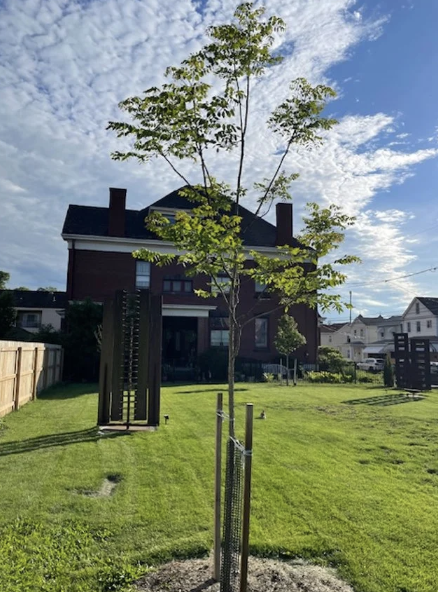
The Kentucky coffee tree (Gymnocladus dioicus) is a striking, deciduous tree native to the central and eastern United States, known for its bold, rugged appearance and large, bi-pinnately compound leaves—the largest of any native tree in North America. It can grow 60–80 feet tall and thrives in a variety of soil types, making it well-suited to both natural and urban environments.
The tree gets its name from the seeds found in its large, leathery seed pods, which early settlers roasted as a substitute for coffee, although raw seeds are toxic if not properly prepared. With its coarse winter silhouette, fragrant spring flowers, and golden fall color, the Kentucky coffee tree is both ornamental and ecologically valuable, providing habitat and food for pollinators and birds.

The eastern redbud (Cercis canadensis) is a small, graceful deciduous tree native to eastern North America, celebrated for its vibrant early-spring display of pink to magenta flowers that bloom in clusters directly on branches and trunks—a phenomenon known as cauliflory.
Typically reaching 20–30 feet in height, it has a rounded crown and heart-shaped leaves that emerge reddish, turn green in summer, and often take on yellow tones in fall. The redbud thrives in a variety of soils and light conditions, making it a popular ornamental tree in both gardens and natural landscapes.
Its blossoms are a crucial early nectar source for pollinators, and its distinctive beauty makes it a beloved symbol of spring across much of the United States.
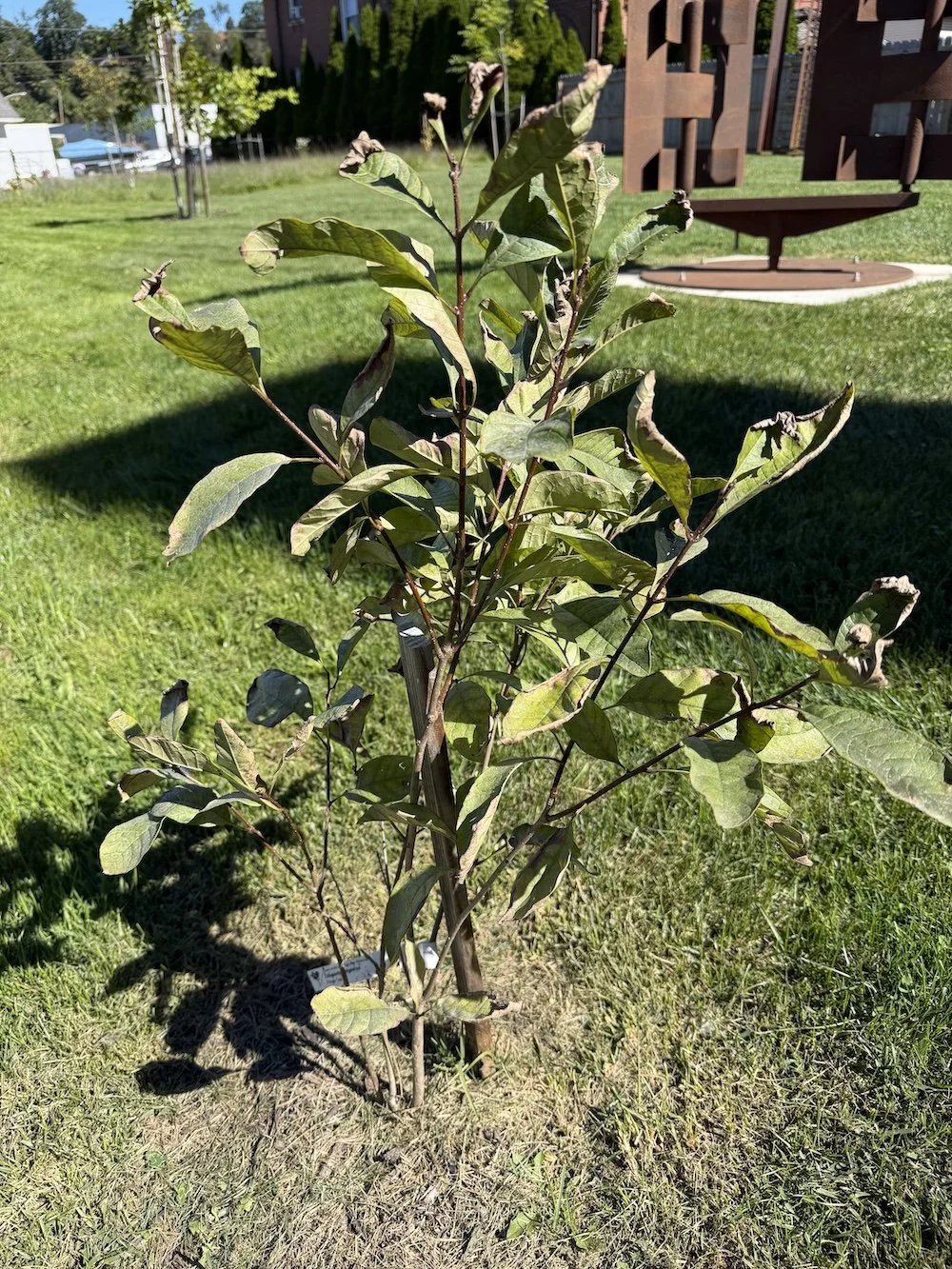
Fringetree belongs to the olive family, Oleaceae, including olive, lilac, ash, and forsythia. Common names for fringetree include old man's beard, flowering ash, grandfather graybeard, and white fringetree. A small deciduous multi-stemmed tree, fringetree reaches heights of 12 to 20 feet as an ornamental, up to 30 feet in the wild. The fringetree does take its time to achieve these heights, growing an average of 6 to 10 inches yearly. The fringetree has steady growth in its first years with alternate branching and an ordered shape. As the tree ages, the branches become irregular—twisting and turning to create a unique structure.
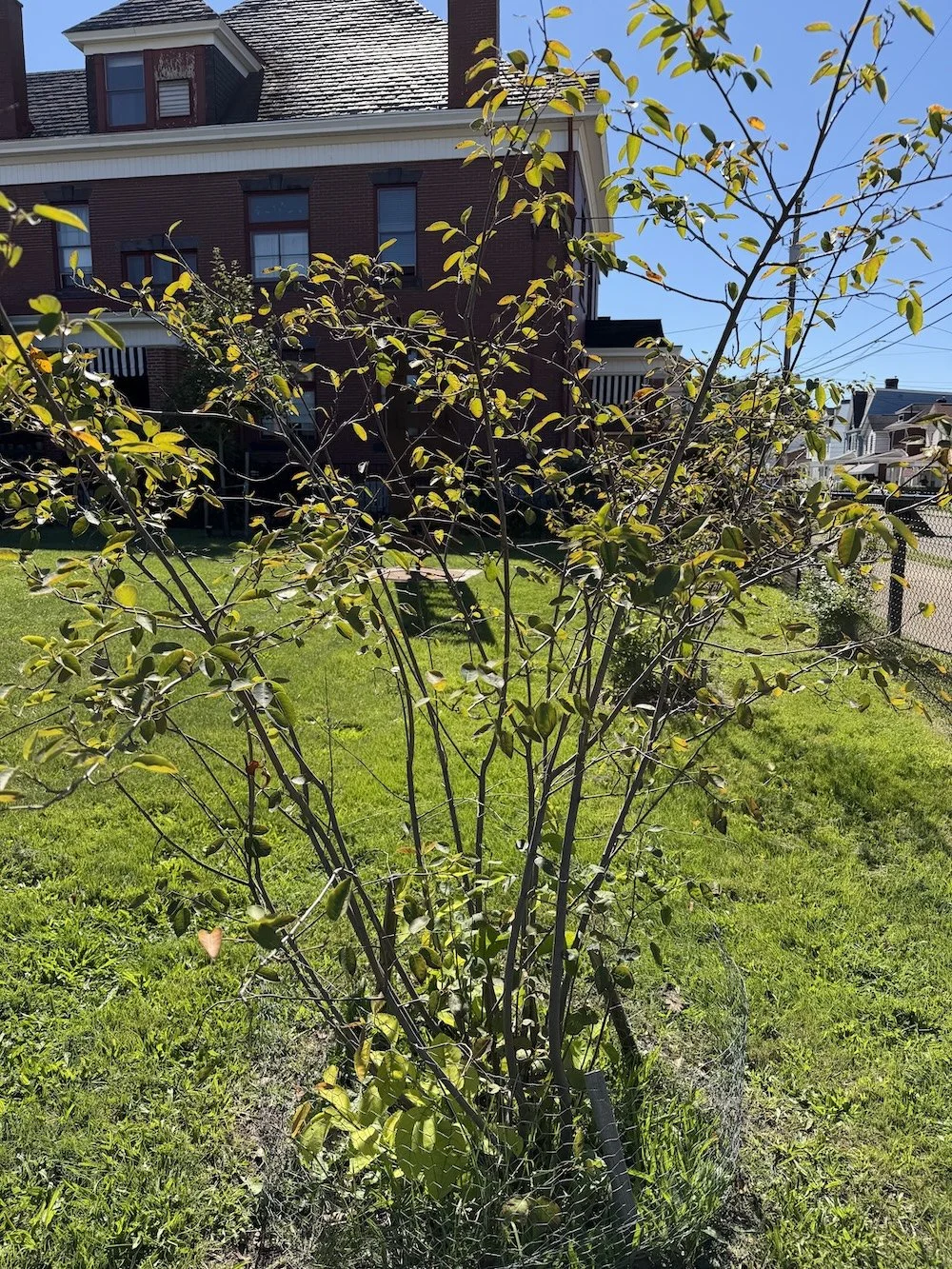
Serviceberry (Amelanchier spp.) Species vary from large shrubs to single- or multi-stemmed small trees.
They are used as specimen and key plants in landscapes and in group plantings as borders, backdrops and screens.
Serviceberry provides year-round interest with white spring flowers, yellow to red fall foliage, smooth gray bark, and edible purple fruit.
Also called Juneberries or Saskatoon berries, several serviceberry species are native to Pennsylvania and other parts of the United States.

The red maple (Acer rubrum) is one of the most widespread and adaptable deciduous trees in eastern North America, known for its brilliant red foliage in autumn, as well as its red flowers, stems, and seeds in early spring. Growing 40 to 70 feet tall, it thrives in a wide range of soil types and moisture conditions, from dry uplands to moist bottomlands. The red maple’s fast growth, attractive shape, and vibrant seasonal color make it a popular choice for urban planting and landscaping. Its flowers provide early nectar for bees, and its seeds (samaras) are a food source for birds and small mammals. With its combination of beauty, resilience, and ecological value, the red maple is a defining feature of many American forests and communities.